Photobiomodulation Explained: Red Light Therapy vs Laser Therapy
Red light therapy, cold laser, low level light therapy, photobiomodulation: if these terms have left you wondering what they actually mean and whether any of them could help you, you are in the right place. At Coastal Rehab Hub in Erina, we use two forms of photobiomodulation every week, so we hear these questions often. In this guide we explain what photobiomodulation is, how red and near-infrared light interact with your cells, and how full-body LED red light therapy compares with targeted laser therapy.
Key Takeaways
- Photobiomodulation (PBM) is the use of specific red and near-infrared light wavelengths, at low intensity, to support the body's natural healing processes. It is not a cure for any condition, but it can be a useful part of a broader rehabilitation or wellness plan.
- Red light mainly reaches the skin and surface tissues, while near-infrared light travels deeper into muscles, joints and nerves.
- At Coastal Rehab Hub we offer two forms of PBM: full-body red light therapy in the Prism Light Pod (sessions of about 15 minutes) and targeted MLS Laser Therapy (sessions of around 10 to 15 minutes).
- PBM is non-invasive and generally well tolerated, but it should complement medical care rather than replace it, and responses vary from person to person.
What Is Photobiomodulation (PBM)?
Photobiomodulation is the therapeutic use of low-intensity red and near-infrared light to influence how your cells work. In simple terms, it gives your cells a gentle nudge to function more efficiently, without heating or damaging tissue.
You may have seen it called by other names, including:
- Red light therapy
- Low level laser therapy (LLLT) or cold laser therapy
- LED light therapy
- Low level light therapy
These terms overlap a lot. They all describe the same core idea: using specific wavelengths of light to support the body's own repair processes. The device can be an LED panel or pod, or a laser, but the underlying principle is the same.
Research into low level light began decades ago, looking at areas such as wound healing, and has since expanded into pain, musculoskeletal conditions, skin health and recovery. The evidence continues to grow and evolve, and results vary depending on the condition, the person and the treatment settings used. That is why we use PBM as one tool within a personalised plan rather than a stand-alone fix.
How Red and Near Infrared Light Affect Your Cells
Red and near-infrared light work because structures inside your cells absorb them and respond by producing energy more efficiently. Different wavelengths behave differently in the body, and that difference shapes how each type of therapy is used.
- Red light (around 630 to 700 nm) penetrates more shallowly. It mainly reaches the skin and surface tissues and is the range most associated with skin health and collagen support.
- Near-infrared light (around 700 to 850 nm and beyond) travels deeper. It can reach muscles, tendons, joints and nerves, which makes it relevant for pain, stiffness and deeper tissue recovery.
What happens inside the cell?
The key target is the mitochondria, the energy-producing parts of your cells. When red or near-infrared light reaches an enzyme in the mitochondria called cytochrome c oxidase, it helps the cell produce more ATP, the molecule cells use for energy. This process is linked with:
- Better local blood flow, partly through the release of nitric oxide
- Calming of inflammation
- Support for the cell's own repair and recovery processes
There is also an important idea called the dose window. Too little light may do very little, while too much may be less effective. Getting the wavelength, power and treatment time right is what makes photobiomodulation effective, and it is one of the main reasons clinical guidance matters.
LED Light Therapy vs Low Level Laser Therapy: What's the Difference?
LED light therapy and low level laser therapy are both forms of photobiomodulation, but LEDs treat large areas at once while lasers concentrate light into a small, defined area. Each is suited to different situations.
- Light source: light emitting diodes (LEDs) produce light that spreads across a broad area. Lasers produce a focused, coherent beam.
- Coverage: LED panels and pods can cover large areas or the whole body. A laser targets a small region, such as a single joint, tendon or nerve pathway.
- Depth and concentration: a laser can deliver a more concentrated dose to one spot. LEDs deliver gentler light over a much larger surface area at the same time.
- Typical uses: LED light therapy suits general wellness, skin health, broad recovery and widespread soreness. Laser therapy suits specific injuries, tendons, joints or areas of nerve irritation.
What matters most is matching the right wavelengths, power and treatment time to your goals, rather than the device itself. Blue light, which you may see used for some skin treatments, is a different therapy and not part of our photobiomodulation services.
Our Full-Body Red Light Therapy: The Prism Light Pod
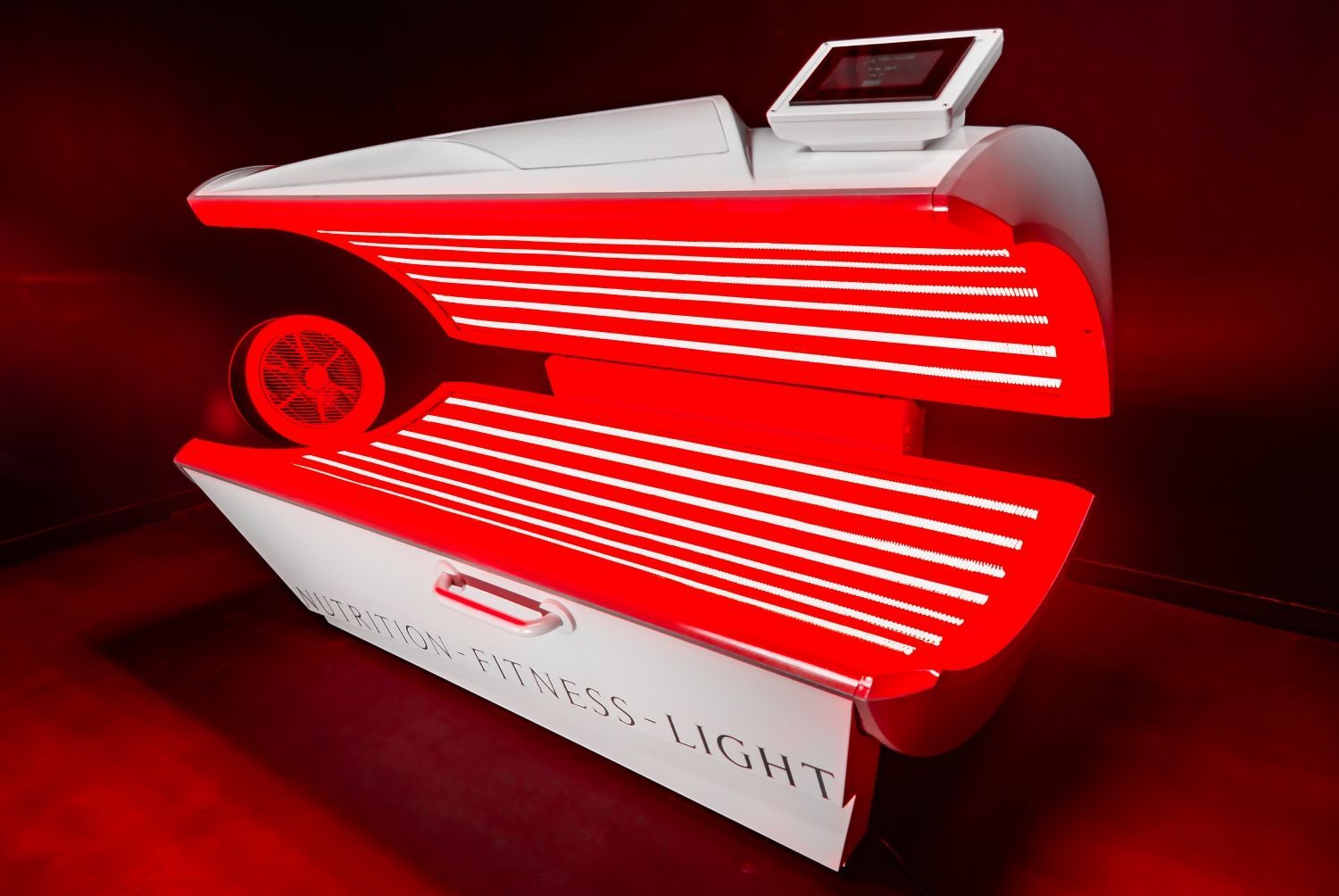
The Prism Light Pod is our full-body red and near-infrared LED light therapy system at Coastal Rehab Hub in Erina. It treats your whole body at once in a single, relaxing session.
What a session looks like:
- A typical session lasts about 15 minutes
- You lie comfortably inside the pod while red and near-infrared light surrounds your body
- Most people feel a gentle warmth, and there are no needles or injections
- Eye protection is available if you prefer it
Why people choose full-body red light therapy:
- Recovery after sport, training or heavy physical work
- Widespread muscle tightness or mild aches in several areas
- General wellness, energy and relaxation
- Skin health across larger areas of the body
Because the light reaches many areas at once, the pod is a good fit when symptoms are spread out rather than focused in one small spot. We also offer Prism Light Pod sessions as part of our menopause and post-natal support. If you want to understand the pod in more depth, our article on discovering red light therapy on the Central Coast walks through it, and you can read more about our red light therapy Central Coast service.
Our MLS Laser Therapy: Targeted Low Level Laser for Specific Areas
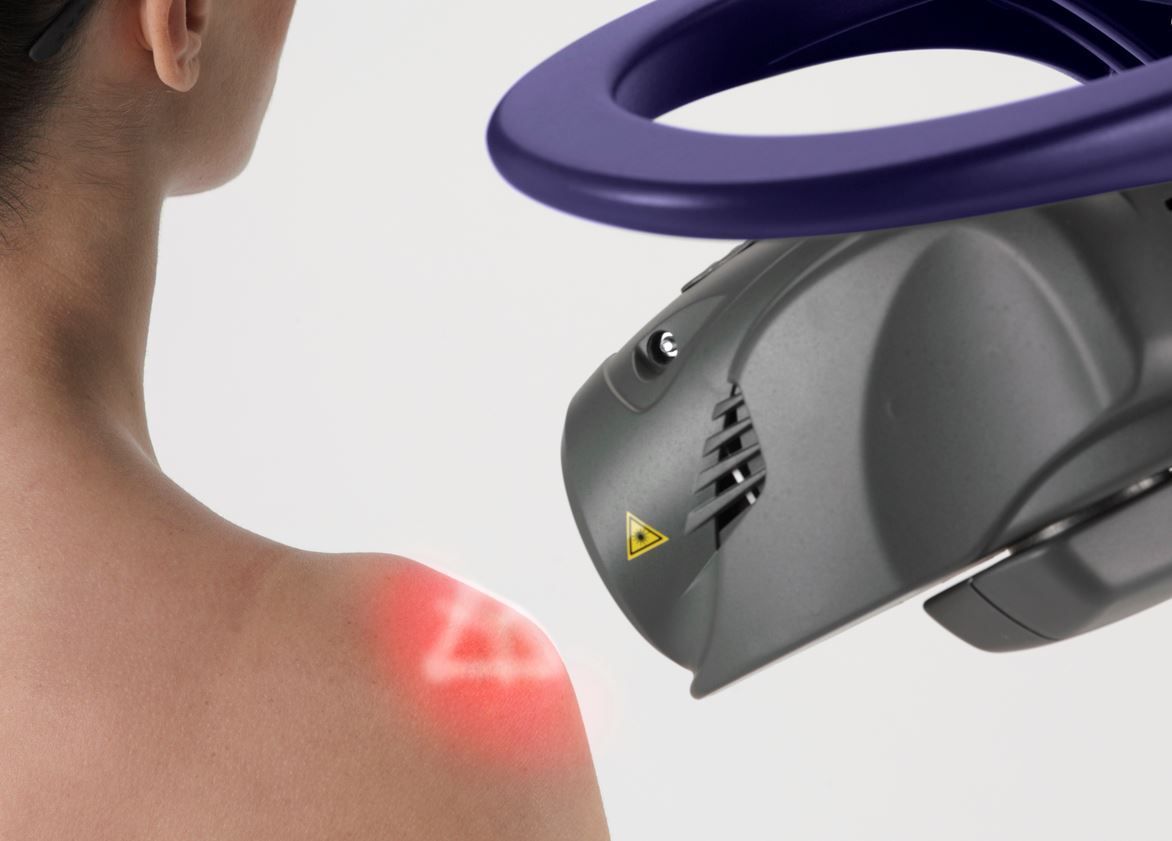
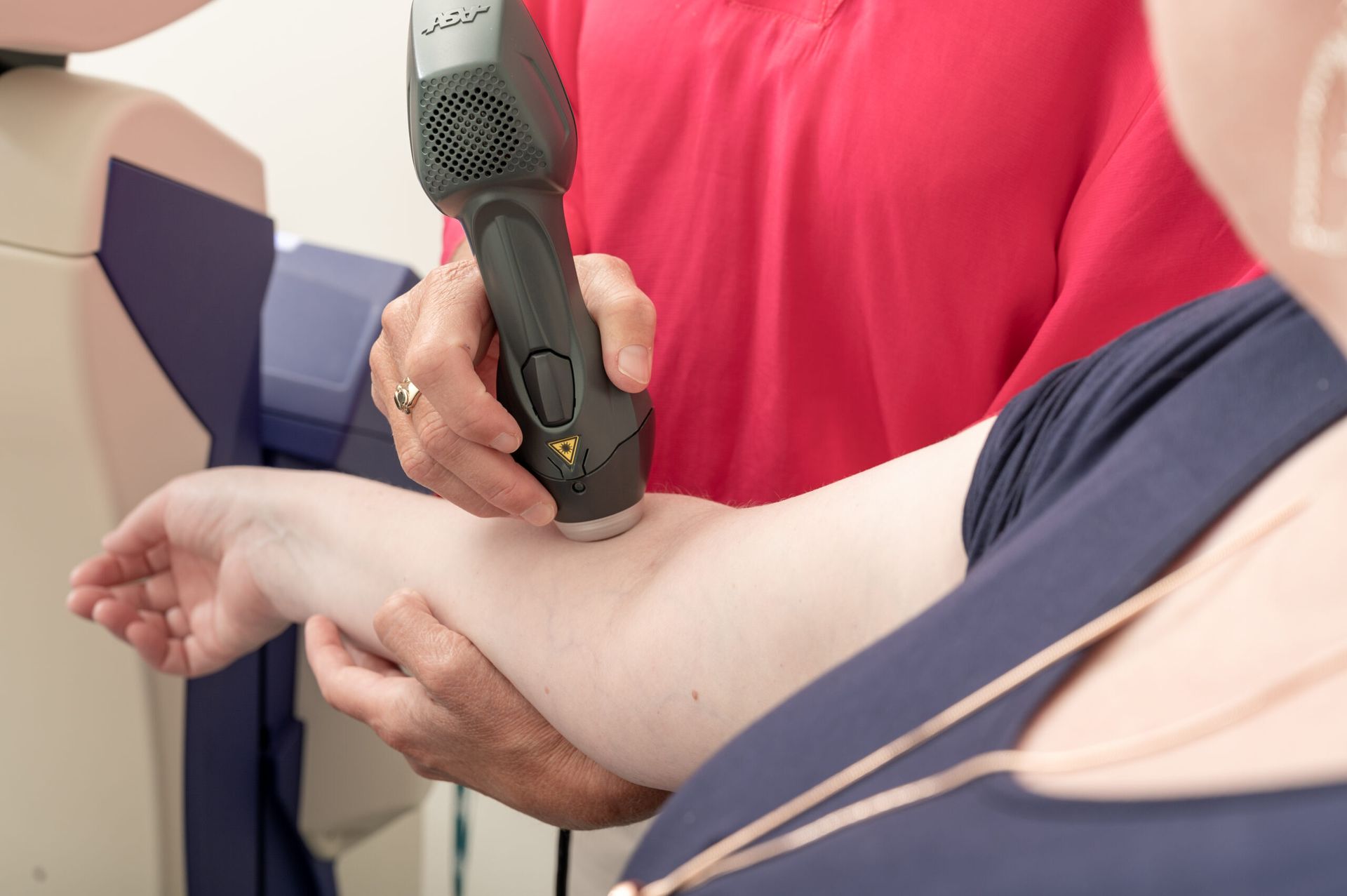
MLS Laser Therapy is our targeted form of laser photobiomodulation, focusing light energy on one specific area such as a painful joint, tendon, ligament or area of nerve irritation.
What an MLS session looks like:
- Most sessions take around 10 to 15 minutes, depending on the area being treated
- You relax while the laser head is positioned over the treatment area
- The treatment is non-invasive, pain-free and drug-free, with no downtime afterwards
MLS (Multiwave Locked System) technology delivers two near-infrared wavelengths together: an 808 nm continuous wave aimed at swelling and circulation, and a 905 nm superpulsed wave aimed at deeper penetration and pain relief. A typical treatment plan is 6 to 10 sessions across 3 to 5 weeks, depending on your condition.
This option may suit you if you have:
- A clearly defined problem area, such as an ankle sprain, knee pain, a sore shoulder or localised back pain
- Tendon or ligament problems where precise targeting is helpful
- Swelling or discomfort after surgery, or side effects from cancer treatment
Our OncoLaser program uses MLS Laser Therapy to ease radiation dermatitis, scar tightness and chemotherapy-related symptoms. You can learn more about our MLS laser therapy Central Coast service.
Conditions Photobiomodulation Is Commonly Used For
Photobiomodulation is most commonly used to support pain relief, tissue recovery and general wellbeing. At Coastal Rehab Hub we focus on the areas most relevant to rehabilitation and wellness, and we never make cure claims.
Common uses include:
- Musculoskeletal pain and stiffness: back and neck pain, arthritis, tendonitis and sports injuries
- Recovery after injury or surgery: supporting soft tissue healing alongside exercise and hands-on therapy
- Nerve-related symptoms: some forms of nerve pain, combined with medical care
- Cancer rehabilitation: support for side effects such as radiation skin changes and scar tightness
- Skin and tissue health: scar management and general skin support
- Fatigue and general wellbeing: as a restorative add-on to good sleep, movement and nutrition
Researchers are also studying PBM in other areas, but that work is still emerging. If you have a neurological or other complex condition, please talk to your specialist first. For more on the conditions laser therapy is used for, see our article on conditions that can benefit from laser therapy.
Everyone responds differently. Not everyone will notice the same level of change, and that is something we talk through honestly with you.
What a Session at Coastal Rehab Hub Feels Like
A photobiomodulation session at Coastal Rehab Hub is calm, comfortable and usually relaxing. We know trying something new can feel uncertain, so here is what to expect.
Before treatment:
- We talk through your goals, symptoms and medical history
- No GP referral is needed, although we are happy to work with your GP or specialist
- We make sure your eyes are protected where needed
During treatment:
- In the Prism Light Pod, you lie comfortably inside the pod for about 15 minutes
- For MLS Laser Therapy, you are positioned comfortably on a treatment table
- Most people feel relaxed, and some notice mild warmth. Pain is not expected
After treatment:
- You can usually get straight back to your day
Our clinic is in Erina, just minutes from Erina Fair, and is designed to feel calm and welcoming from the moment you walk in.
Safety, Side Effects and Who Should Be Careful
Photobiomodulation is non-invasive and generally well tolerated when it is used appropriately. Safety comes down to the right settings, sensible session times and a clinician who knows your health history.
Safety measures we follow:
- Laser light is never directed into the eyes, and eye protection is used where needed
- Skin is checked before treatment, and sessions are adjusted for broken skin, infection or sensitivity
- Sessions are time-limited to keep the dose within the right range
Some people notice temporary warmth or redness, or feel tired or a little sore for a short time afterwards. These effects usually settle quickly.
Please seek medical advice before PBM if you:
- Are pregnant
- Have a known or suspected cancer in the area to be treated
- Take medications that make your skin sensitive to light
- Have poorly controlled epilepsy or a complex neurological condition
Tell us about any major diagnoses so we can plan safely together with your medical team.
How Many Sessions, and When Might You Notice a Difference?
Photobiomodulation tends to work cumulatively, so most people benefit from a short course of sessions rather than a single visit. Your plan is always individual.
- For MLS Laser Therapy, a typical plan is 6 to 10 sessions across 3 to 5 weeks, depending on your condition
- For the Prism Light Pod, we usually suggest starting with a short series of sessions and reviewing how you feel
- Recent injuries often respond sooner than long-standing pain or joint changes
We often combine PBM with other evidence-based care, such as exercise, hands-on therapy and education, rather than relying on light alone. We review your progress regularly, and if PBM is not helping after a reasonable trial, we will talk with you about other options rather than continuing for the sake of it.
Comparing Full-Body Prism Light Pod and Targeted MLS Laser Therapy
The Prism Light Pod is usually the better fit when your goals are whole-body, and MLS Laser Therapy is usually the better fit when you have one clearly defined problem area.
When the Prism Light Pod may suit you better:
- Widespread muscle fatigue or soreness after training or long days
- General wellbeing goals, such as relaxation, energy and recovery
- Several mild aches rather than one distinct injury
- Skin health across larger areas of the body
When MLS Laser Therapy may suit you better:
- Localised pain in a specific knee, ankle, shoulder or part of the back
- Tendon or ligament problems that need precise targeting
- Swelling or discomfort after surgery
- Side effects from cancer treatment, through our OncoLaser program
You do not have to decide on your own. Our therapists can help you choose the right starting point. Call us on 02 4312 7033 to talk it through.
What the Research Says: A Brief Look at Clinical Studies
Research on photobiomodulation is growing and largely encouraging, but study methods vary and not every trial is positive. We think it is important to be upfront about that.
Areas researchers have explored include:
- Musculoskeletal pain, such as knee osteoarthritis and neck pain
- Tendon problems and sports injuries
- Wound healing and recovery after surgery
- Side effects of cancer treatment
- Some neurological conditions, which are still mostly at the research stage
A few consistent themes come through:
- Red and near-infrared wavelengths are the most commonly studied
- Getting the dose right is critical
- PBM is usually most useful alongside other treatments, especially exercise, rather than on its own
We base how we use PBM on current evidence and ongoing professional development, while staying honest about its limits.
Integrating Photobiomodulation into Your Rehabilitation Plan
At Coastal Rehab Hub, photobiomodulation is one part of a broader rehabilitation plan rather than a quick fix on its own.
Common combinations include:
- MLS Laser Therapy before exercise, to ease pain so you can move better
- Prism Light Pod sessions on days your muscles feel fatigued from training or rehab
- Light therapy combined with remedial or lymphatic massage and movement work
- Light therapy alongside education on pacing, sleep and managing your load
Treatment decisions are made together, taking into account your goals, time and medical history. We are happy to coordinate with your GP, specialist or other health providers on the Central Coast so your care stays joined up.
How to Prepare and What to Tell Your Therapist
A little preparation helps you get the most from your first photobiomodulation session.
Before your appointment:
- Wear comfortable clothing that allows easy access to the area being treated
- Avoid applying thick creams or lotions to the area just before treatment, unless we have discussed it
- Bring a list of your medications and relevant medical history
Please tell us about:
- Any implanted devices or metalwork from previous surgery
- Any history of seizures, migraines or sensitivity to bright light
- Your current symptoms, how long you have had them and what makes them better or worse
- Whether you are pregnant or planning a pregnancy
- Any history of cancer, especially in the area to be treated
The more we know, the better we can tailor your treatment and fit it safely into your broader plan.
Frequently Asked Questions
Do I need a GP referral to access photobiomodulation at Coastal Rehab Hub?
No, you do not need a GP referral to book red light therapy in the Prism Light Pod or MLS Laser Therapy with us. If you have a complex medical history, we may ask for more detail or suggest involving your GP or specialist, and we are happy to talk with your medical team. Call 02 4312 7033 to discuss whether PBM is likely to suit you.
Does red light therapy feel hot?
Most people describe a gentle, comfortable warmth rather than heat. Red light therapy is not the same as a solarium or tanning bed, which uses UV light. Photobiomodulation uses red and near-infrared light, which does not tan or burn the skin at therapeutic doses.
Can I have photobiomodulation if I already see another practitioner?
Yes, PBM can often be added to the care you already have. We encourage you to let your other providers know you are having light therapy so everyone is on the same page. With your consent, we can share information with them to keep your care coordinated.
Is photobiomodulation covered by private health insurance?
It depends on your fund and level of cover. Many of our services can be claimed under extras cover, and we accept all major private health funds through HICAPS, so you can claim on the spot where your extras cover applies. Check with your fund about the specific service before your appointment.
How do I book or find out which option is right for me?
Call the Coastal Rehab Hub team on 02 4312 7033 to talk about your goals and symptoms. We will help you work out whether photobiomodulation is likely to help, and whether the Prism Light Pod, MLS Laser Therapy or a combination with our other services is the best place to start.
Recent Posts